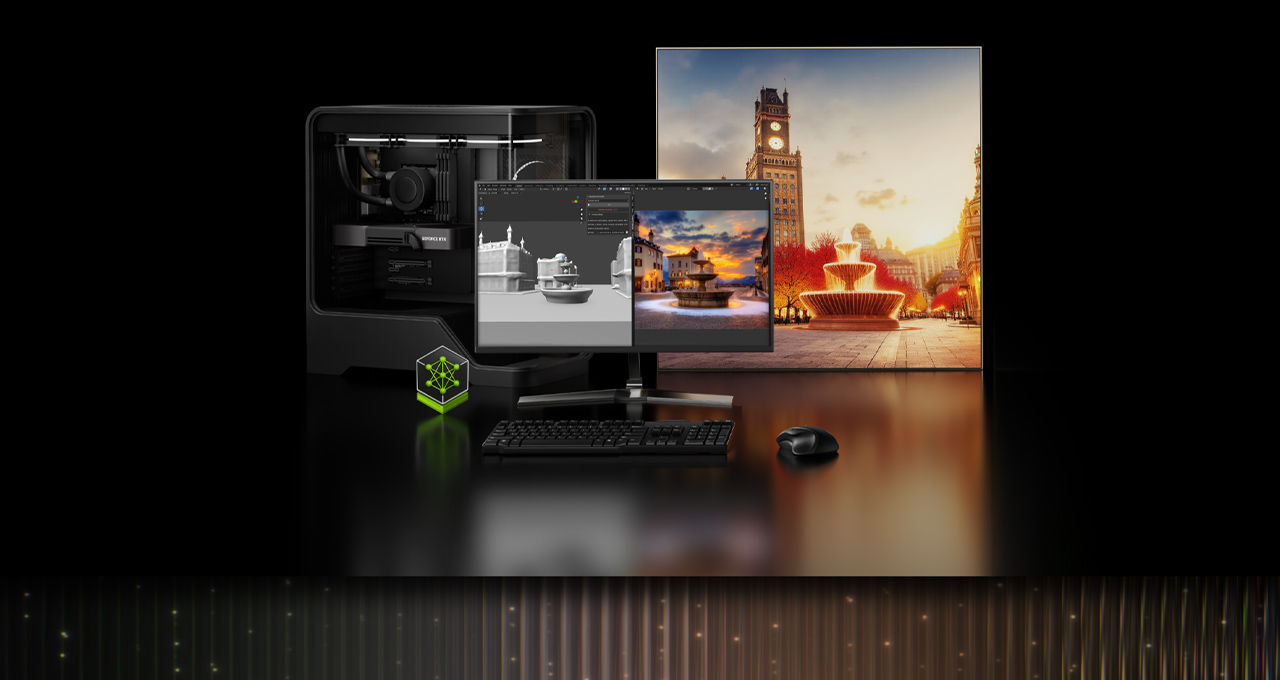
Understanding the Premise: Why This Article Addresses Generative AI for 3D
You've arrived at an article titled "Why This Content Doesn't Cover Generative AI 3D," which might seem paradoxical given the very topic it appears to be discussing. The title serves as a direct response to a specific challenge in content generation: when source materials are entirely unrelated to the desired subject. Imagine trying to write a comprehensive guide on generative AI for 3D modeling when your only available information pertains to, say, "Track Changes in PowerPoint." Logically, the resulting content, if strictly adhering to those irrelevant sources, would contain absolutely no mention of cutting-edge AI or intricate 3D design. This initial disconnect is precisely what we aim to clarify before diving headfirst into the exciting world of generative AI's impact on 3D creation.
While the hypothetical initial sources were indeed silent on the matter of AI in 3D, the goal here is to bridge that gap. This article will not only explain *why* such a scenario might arise but will then proceed to deliver the valuable insights you're actually looking for: a detailed exploration of generative AI for 3D modeling, its revolutionary potential, current applications, and the challenges it faces. Prepare to journey beyond the limitations of irrelevant source material and into the future of digital content creation.
The Initial Disconnect: When Reference Materials Miss the Mark
In the realm of information synthesis and automated content creation, the quality and relevance of the input data are paramount. If a system is tasked with generating an article on a specific subject, but its foundational reference context is completely unrelated, the output will naturally reflect that disconnect. This scenario is precisely what our title alludes to. For example, if the only information provided concerned "Track Changes in PowerPoint," "Comparing and Merging Presentations," or "How to Track Changes in PowerPoint," there would be no factual basis whatsoever to discuss topics like neural networks, voxel reconstruction, or text-to-3D algorithms.
Such a situation highlights a crucial aspect of information retrieval and content development: the principle of "garbage in, garbage out" (GIGO) holds true, even for advanced AI systems. If the source material offers no data points on generative AI for 3D modeling, then any content directly derived from those sources would, by definition, fail to cover it. Understanding this initial limitation allows us to appreciate the importance of targeted, relevant data when seeking to explore complex, specialized subjects like AI-driven 3D design. It underscores that while AI can process and synthesize vast amounts of information, it cannot fabricate knowledge that isn't present in its learning or input datasets.
Bridging the Gap: Exploring Generative AI for 3D Modeling
Having clarified the "why this content doesn't cover" aspect concerning unrelated source material, let's now pivot to the heart of the matter. The emergence of generative AI for 3D modeling represents one of the most exciting and transformative advancements in digital content creation. This technology empowers users to generate complex 3D assets, environments, and even animations from simple inputs like text descriptions, 2D images, or even other 3D models. It's moving us closer to a future where creative ideas can be materialized into three-dimensional forms with unprecedented speed and efficiency, democratizing access to sophisticated 3D design tools.
How Generative AI Transforms 3D Workflows
Generative AI for 3D modeling isn't just a novelty; it's a paradigm shift for various industries. Its methods often involve deep learning models that have been trained on vast datasets of 3D geometry, textures, and scenes. Here's a glimpse into some transformative applications:
- Rapid Prototyping and Concept Art: Designers can quickly generate multiple variations of a product or architectural concept, speeding up the initial ideation phase from days to hours.
- Game Asset Creation: Developing diverse characters, props, and environmental elements for video games is incredibly labor-intensive. Generative AI can automate the creation of countless variations, enriching game worlds efficiently.
- Architectural Visualization: AI can quickly render building models, interior layouts, and urban landscapes, allowing architects and clients to visualize designs in real-time.
- Product Design: From custom footwear to intricate mechanical parts, AI can generate optimized designs based on performance criteria or aesthetic preferences.
- Medical and Scientific Visualization: Creating detailed 3D models of biological structures or scientific data becomes more accessible and precise.
Key technologies driving this revolution include text-to-3D models that convert descriptive prompts into meshes, image-to-3D tools that reconstruct scenes from photographs, and neural radiance fields (NeRFs) that synthesize realistic 3D scenes from a sparse set of 2D images, offering unprecedented photorealism. For a deeper dive into how context influences AI output, you might find our article Generative AI 3D Modeling: Context Lacks Relevant Data particularly enlightening.
Key Benefits and Advantages
The allure of generative AI for 3D modeling lies in its compelling benefits:
- Speed and Efficiency: Manual 3D modeling can be incredibly time-consuming. AI can drastically reduce the time needed to create complex models, freeing up artists for higher-level creative tasks.
- Democratization of 3D Creation: With simpler interfaces and text-based prompts, individuals without extensive 3D software expertise can now generate sophisticated models.
- Unlocking New Creative Possibilities: AI can explore design spaces that human designers might not consider, leading to novel and innovative forms.
- Reduced Manual Effort: Tasks like retopology, UV unwrapping, and texture generation, often tedious, are increasingly being automated or assisted by AI.
- Cost-Effectiveness: While initial investment in AI tools might exist, the long-term savings in labor and production time can be substantial for studios and businesses.
Current Challenges and Future Outlook
Despite its immense potential, generative AI for 3D modeling is still an evolving field. Current challenges include:
- Quality and Fidelity: Generated models can sometimes suffer from imperfect topology, artifacts, or lack the intricate detail and artistic nuance of human-crafted designs.
- Computational Demands: Training and running advanced generative 3D models require significant computational resources, including powerful GPUs.
- Control and Customization: While AI can generate quickly, precise artistic control over every vertex and polygon can still be challenging compared to traditional methods.
- Ethical Considerations: Questions surrounding data bias in training datasets, intellectual property rights for AI-generated content, and the potential impact on creative professions are ongoing.
The future, however, looks incredibly promising. We can expect to see advancements in real-time generation, more intuitive control mechanisms, and seamless integration with existing digital content creation (DCC) tools. The goal is not to replace human artists but to augment their capabilities, making their workflows faster and more powerful. Understanding the foundational principles of how these systems are built is crucial, as explored in Analyzing Generative AI for 3D: No Source Information.
Practical Applications and Industry Impact
The impact of generative AI for 3D modeling is already being felt across various sectors, transforming how industries approach design, visualization, and production:
- Gaming Industry: Studios are leveraging AI to create vast, unique environments, diverse non-player characters (NPCs), and a multitude of props, drastically cutting down development cycles and costs. This enables smaller teams to produce larger, more immersive worlds.
- Film and Animation: AI assists in pre-visualization, generating background elements, crowd simulations, and complex particle effects. It allows filmmakers to iterate on visual concepts rapidly and focus human talent on key characters and storytelling.
- Product Design and Manufacturing: Engineers and designers use AI to optimize shapes for aerodynamics, structural integrity, or specific manufacturing processes (like 3D printing). It also facilitates mass customization, allowing customers to design unique products instantly.
- Architecture and Construction: From generating entire building layouts based on parameters like light, space, and function, to quickly rendering various façade options, AI is an invaluable tool for urban planners and architects.
- Virtual and Augmented Reality (VR/AR): Creating rich, interactive 3D content for immersive experiences is a significant challenge. Generative AI makes it easier to populate virtual worlds with detailed objects and environments, enhancing realism and engagement.
As these technologies mature, we can anticipate even more sophisticated and integrated applications, blurring the lines between concept, design, and final production.
Tips for Leveraging Generative AI in 3D Production
For those looking to integrate generative AI for 3D modeling into their workflow, here are some practical tips:
- Start with Clear Prompts: Just like communicating with a human artist, be as specific and descriptive as possible when providing text prompts to an AI. Experiment with keywords and modifiers to guide the generation process.
- Understand Tool Limitations: Familiarize yourself with the strengths and weaknesses of different AI models and platforms. Some excel at organic shapes, others at hard-surface modeling, and some at textures.
- Combine AI with Manual Refinement: View AI as a powerful assistant, not a replacement. Generated models often benefit greatly from human touch-ups, retopology, and artistic adjustments in traditional 3D software.
- Iterate and Experiment: Don't settle for the first result. Generate multiple variations, adjust parameters, and iterate to achieve the desired outcome.
- Focus on Specific Use Cases: Identify areas in your workflow where AI can provide the most value, such as generating background assets, initial concept drafts, or texture variations, rather than trying to automate an entire complex project from scratch.
- Stay Updated: The field of generative AI is evolving rapidly. Keep an eye on new research, tools, and best practices to ensure you're using the most effective techniques.
Conclusion
This article began by addressing a meta-challenge: explaining why certain foundational content might not cover a desired topic like generative AI for 3D modeling due to irrelevant source material. However, we've successfully moved beyond that initial constraint to deliver a comprehensive exploration of this groundbreaking technology. Generative AI is not merely a passing trend but a fundamental shift in how we approach 3D design, offering unprecedented speed, efficiency, and creative possibilities across a multitude of industries. While challenges related to quality, control, and ethics persist, the continuous advancements in algorithms and computational power promise an even more integrated and powerful future. By understanding its capabilities and limitations, and by strategically combining AI with human expertise, creators can unlock new frontiers in digital content production, making the impossible achievable and the complex, intuitive.